Prioritizing Architecture over Coding to build future-ready digital ecosystems. Read Our Philosophy →

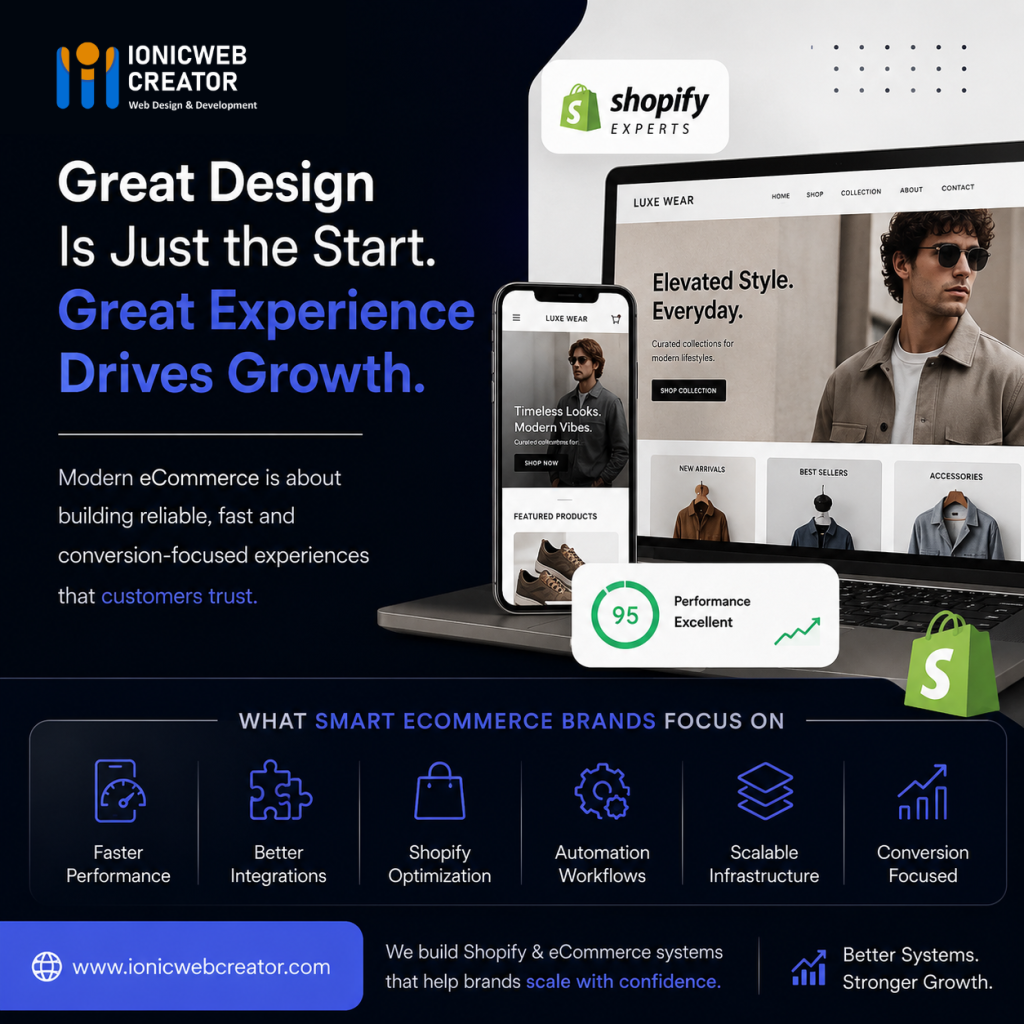
Shopify Ecommerce Growth Requires More Than Great Design
Modern ecommerce brands are investing heavily in design, branding, and advertising — but many still struggle to achieve sustainable growth.
A visually attractive Shopify store can create a strong first impression, but design alone is rarely enough to improve long-term ecommerce performance.
Today, customer experience plays a major role in how ecommerce brands scale, retain customers, and improve conversion quality.
Why Many Shopify Stores Struggle to Scale
Many ecommerce stores experience issues such as:
- slow mobile performance
- inconsistent user experience
- confusing product navigation
- unnecessary app overload
- weak conversion flow
- fragmented shopping journeys
These problems often reduce customer trust and negatively impact the overall shopping experience.
As ecommerce competition grows, customers increasingly expect:
- faster loading websites
- smooth browsing experience
- intuitive navigation
- mobile-first usability
- reliable checkout systems
Even small usability issues can affect conversion behavior.
Mobile Experience Is No Longer Optional
A large percentage of ecommerce traffic now comes from mobile devices.
If a Shopify store:
- loads slowly
- feels cluttered
- creates checkout friction
- lacks responsive optimization
users are more likely to leave before completing a purchase.
Mobile-first ecommerce experiences help improve:
- engagement
- usability
- customer retention
- shopping confidence
Modern ecommerce growth depends heavily on delivering reliable experiences across all devices.
Ecommerce Performance Directly Impacts User Trust
Website performance is one of the most overlooked parts of ecommerce growth.
High-performing ecommerce stores often focus on:
- optimized assets
- scalable frontend structure
- lightweight integrations
- fast page rendering
- organized user journeys
Performance affects both:
- customer experience
- search visibility
Slow ecommerce websites frequently experience:
- higher bounce rates
- weaker engagement
- lower conversion quality
Structured UX Improves Ecommerce Conversion
Good ecommerce UX is not only about aesthetics.
It is about helping customers:
- discover products easily
- navigate naturally
- understand product information clearly
- complete purchases without friction
Well-structured Shopify experiences often improve:
- product discoverability
- session duration
- customer confidence
- overall conversion flow
As ecommerce ecosystems become more competitive, usability becomes a major business advantage.
Scalable Ecommerce Systems Support Long-Term Growth
Growing ecommerce brands often require more than a storefront.
Scalable ecommerce infrastructure may include:
- automation workflows
- inventory integrations
- customer management systems
- optimized checkout experiences
- scalable backend architecture
Brands that focus on scalable systems are often better positioned for long-term ecommerce growth.
Modern Ecommerce Is Built on Experience & Trust
Today’s ecommerce customers expect:
- speed
- consistency
- reliability
- usability
- smooth interactions
A modern Shopify experience should not only look professional — it should also support customer confidence and operational scalability.
As digital commerce continues evolving, the brands that succeed long-term are usually the ones prioritizing:
- performance
- structured UX
- mobile optimization
- scalable systems
- customer-focused experiences
Building High-Performance Shopify Experiences
At Ionic Web Creator, we focus on creating Shopify and ecommerce experiences that balance:
- modern UI/UX
- performance optimization
- mobile-first usability
- scalable infrastructure
- conversion-focused development
The goal is not simply to launch a storefront, but to help ecommerce brands build systems designed for long-term growth and better customer experiences.
💬 Discussion (0)
Log in to comment